Cédric Charbit CEO, Saint Laurent
+91 97699 99960 im@digantsharma.com Sign out

Official website

CédricCharbit

Chief Executive Officer, Saint Laurent Since 2 January 2025

A French executive whose career has run through department-store buying floors, Italian ready-to-wear and two of the most closely watched houses in Paris — eight years leading Balenciaga, and, since January 2025, the leadership of Saint Laurent.

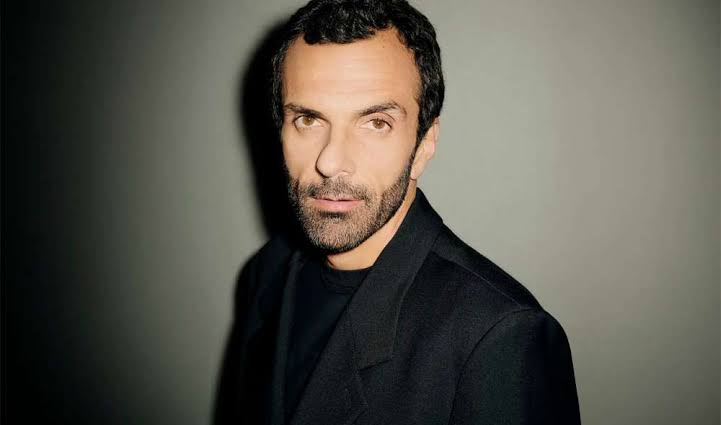
Studio portrait of Cédric Charbit, Chief Executive Officer of Saint Laurent, photographed against a muted olive background
01Cédric Charbit — Chief Executive Officer, Saint Laurent.
Current role
Chief Executive Officer, Saint LaurentEffective 2 January 2025
Previously
President & CEO, BalenciagaNovember 2016 – January 2025
Group
Kering Executive CommitteeMember since 1 July 2019
Formation
ESC Toulouse — TBS EducationFrench national, based in Paris

02  The record

A career in global luxury

Cédric Charbit's career has been built inside the machinery of luxury rather than at its edges — in buying offices, merchandising floors, product studios and the rooms where creative direction meets a profit-and-loss account.

He began at Printemps in 2001, joining the Paris department store as a buyer for luxury and moving through the organisation to General Merchandise Manager and then Deputy Director of the buying office. It was an unusually direct education: years spent watching which pieces sell, to whom, at what price, and why.

In 2009 he moved to Italy as Deputy Chief Executive of Emilio Pucci, then part of the LVMH group — a first experience of running a house from the inside, with the operational responsibility that follows.

He joined Kering in 2012, arriving at Saint Laurent in Paris as Product Strategy Director. Over the following years his remit widened through merchandising to the role of Executive Vice President, with responsibility spanning product, retail merchandising and communication.

In November 2016 Kering appointed him President and Chief Executive Officer of Balenciaga, a year after Demna had taken up the creative direction of the house. He remained for eight years. On 18 November 2024 Kering announced his return to Saint Laurent as Chief Executive Officer, effective 2 January 2025.

The full career journey

03  Editorial analysis

Leadership at the intersection of creativity and business

“A luxury house is two organisations wearing a single name.”

One is a studio: slow, intuitive, protective of its own logic. The other is an industrial and retail operation running on forecasts, lead times and margin. Neither can be subordinated to the other for long without damage. The following observations describe how that tension is generally managed across the industry; they are offered as context and are not presented as personal statements.

Read the leadership page

01

The creative mandate

A creative director needs a protected space in which to be wrong before being right. Where that space is guarded, houses tend to produce work with a recognisable point of view; where it is negotiated away in the name of predictability, the output drifts towards what performed last season. The executive's task is less to have taste than to defend the conditions under which taste can operate.

02

The commercial spine

Behind every collection sits a structure that decides how many units are cut, in which materials, for which markets and at what price. Merchandising is the discipline that translates a creative idea into an assortment a store can actually sell — and, done carelessly, the discipline that flattens the idea into a catalogue. Executives who have worked on the buying side tend to treat it as an editorial craft rather than a spreadsheet exercise.

03

The connective work

Most of the difficulty is not at either pole but in the translation between them: how a studio's intention survives its journey through development, production, wholesale, retail and communication without being restated four times into something else. This is organisational design as much as management — deciding who sits next to whom, who decides what, and where a decision stops being reversible.

04  Industry context

The architecture of a global brand

Global luxury brands are not held together by a logo. They are held together by a small number of structural decisions, repeated with discipline over long periods. Six of them recur across almost every house that has sustained itself internationally.

01

Identity before expression

A house needs a settled answer to what it is before it can decide what to say. Identity is the narrow set of things a brand will still recognise as itself in ten years — a silhouette, an attitude, a relationship to the city it came from. Expression changes every season; identity should not. Brands that revise identity at the pace of expression exhaust their own audience.

02

Cultural relevance as infrastructure

Relevance is not a campaign. It is the accumulated result of who a house works with, which conversations it enters, which artists, musicians and institutions it stands beside, and which it declines. Houses that treat culture as a media buy tend to rent attention; those that treat it as a long relationship tend to be granted it.

03

Creative consistency across surfaces

A customer encounters a brand as a single object even though it is produced by a dozen departments — the show, the store, the website, the packaging, the service at the till. Consistency is expensive because it requires each of those to defer to a shared standard. Its absence is rarely dramatic; it registers as a slow loss of conviction.

04

International positioning without dilution

A house that travels must be legible in Seoul, Riyadh, São Paulo and Milan without becoming a different brand in each. The workable answer is usually a fixed centre and a variable edge: product architecture, price ladder and creative signature held constant, while service, communication and retail rhythm are adapted to local expectation.

05

The customer relationship as an asset

Luxury's economics rest on a comparatively small number of people who return. That makes client development — the quality of the relationship after the transaction — a balance-sheet matter rather than a service nicety. The store network is the primary instrument, and its productivity is a more revealing measure of health than its size.

06

Long-term strategy against short-term signal

Brand equity accrues over decades and can be spent in a season. Most of the genuinely damaging decisions in the sector have been rational responses to a bad quarter. The structural defence is a stated set of priorities that survives the quarter — and the willingness to accept a slower recovery in exchange for a durable one.

Luxury & brand development

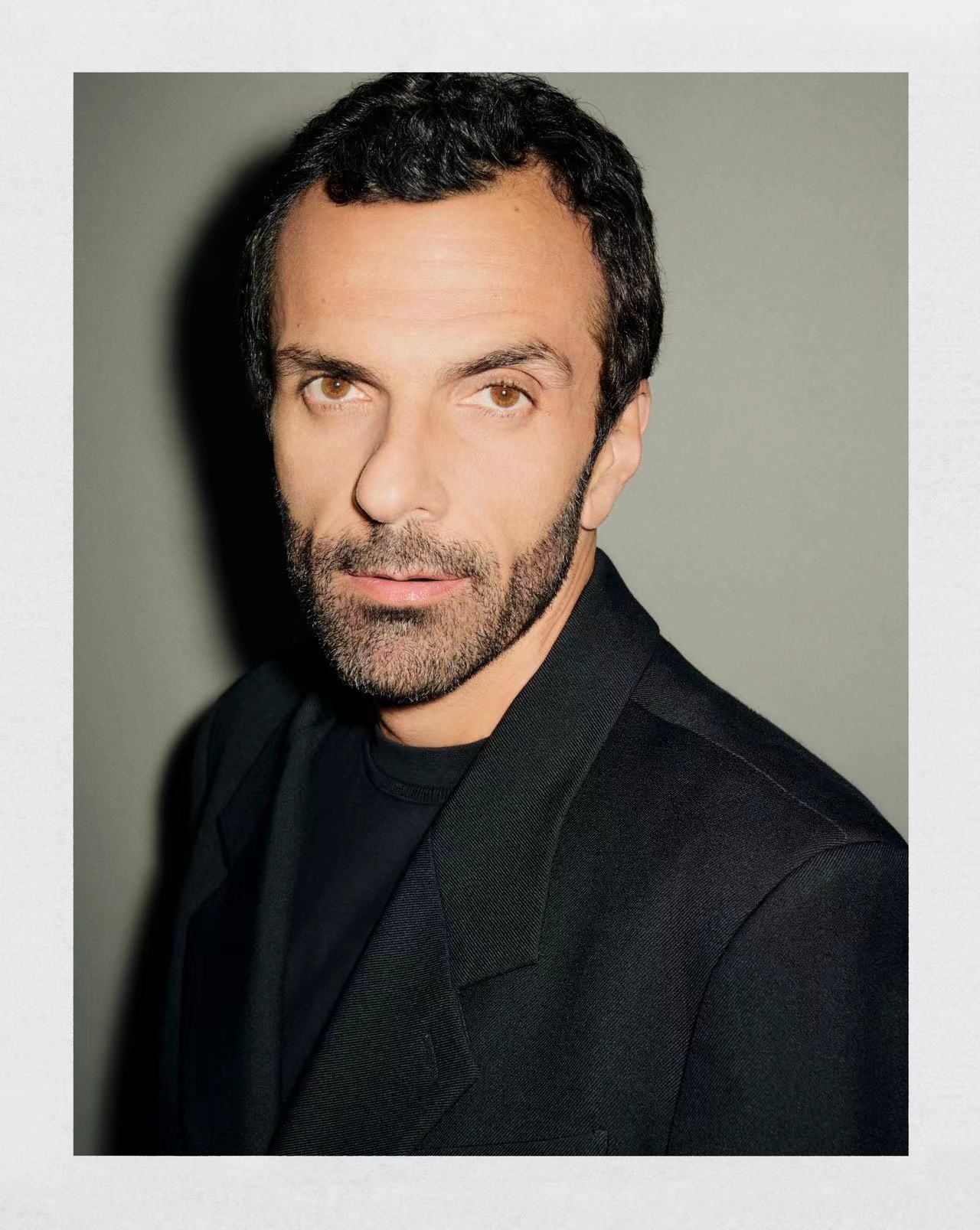
Editorial portrait of Cédric Charbit in a dark jacket against a neutral studio backdrop
02Portrait, undated. Editorial photography.

05  Editorial analysis

Executive leadership

The chief executive of a luxury house occupies an unusual position. The product is decided elsewhere. The brand's meaning is partly outside anyone's control. What the role does own is the quality of decisions: which ones are taken, at what altitude, and how quickly they are reversed when the evidence turns.

Decision-making. In a business with eighteen-month lead times, most decisions are made on incomplete information. The practical question is not how to remove the uncertainty but how to size the commitment to it — which bets are cheap to unwind and which are structural, and being honest about which is which.

International management. A house of any scale operates across markets whose customers, calendars and regulatory environments do not align. Running it centrally produces consistency and blindness; running it locally produces responsiveness and drift. The workable settlement is a small set of non-negotiables and wide latitude everywhere else.

Organisational clarity. Much of what looks like strategic failure is an ambiguity about who decides. Clarity is unglamorous work — naming owners, closing committees, shortening the distance between the studio and the person who will sell the result — but it compounds faster than almost any other intervention.

Change management. Organisations absorb change at a fixed rate. Attempting more than that rate does not accelerate transformation; it produces reversion the moment attention moves elsewhere. Sequencing therefore matters as much as ambition.

Long-term thinking. The discipline is not simply patience. It is the ability to hold a position through a period in which the numbers argue against it, having decided in advance what evidence would legitimately change your mind.
06  The sector

Luxury in transformation

Five shifts that have redefined how houses are built and run over the past decade. Written as industry analysis.

Industry perspectives

i

The customer has changed faster than the calendar

The industry still runs on a seasonal rhythm inherited from a European wholesale system, while its customers buy against weather, travel and personal occasion. Houses have responded with pre-collections, carry-over lines, continuity products and permanent icons — an attempt to give the store something to sell in the long stretches between shows. The consequence is that the runway increasingly functions as a statement of intent rather than a description of the assortment.

ii

Growth has redistributed, not simply moved

For much of the 2010s the sector's growth was concentrated in a small number of markets. The pattern since has been more dispersed: strength in one region offsetting softness in another within the same reporting period. That makes the geographic balance of a store network a strategic variable rather than an administrative one, and it rewards houses whose brand is understood in several places at once rather than dominant in one.

iii

Digital stopped being a channel

The early framing treated e-commerce as a parallel store. What actually happened is that the digital layer became the place where most brand encounters now occur, whether or not a transaction follows. Discovery, comparison, community and resale all sit there. The practical implication is that a brand's image is now co-authored: the house sets the terms, but it does not control the reproduction.

iv

Culture became the competitive arena

Product quality is close to table stakes at the top of the market. What differentiates is the cultural position a house occupies — the artists it commissions, the institutions it supports, the debates it is willing to be part of. This has raised the cost of a misjudgement: cultural presence brings scrutiny alongside relevance, and the two arrive together.

v

Heritage as a working method, not a mood

The houses that use their archives well treat them as a source of construction and proportion rather than nostalgia — reissuing a method rather than a picture. Balenciaga's return to haute couture in 2021, fifty-three years after the closing of the founder's atelier, was among the more visible examples of a European house re-opening a discipline it had let lapse and using it to re-anchor the rest of the business.

07  Verified record

Career milestones

2001Paris

Printemps

Joins the Paris department store as a buyer for luxury, later becoming General Merchandise Manager and Deputy Director of the buying office.

2009Italy

Emilio Pucci — Deputy Chief Executive

Appointed Deputy Chief Executive of Pucci, then part of the LVMH group, based in Italy.

2012Paris

Saint Laurent — Product Strategy Director

Joins Kering, arriving at Saint Laurent in Paris. His remit later widens through merchandising to Executive Vice President with responsibility for product, retail merchandising and communication.

2016November

Balenciaga — President & Chief Executive Officer

Appointed to lead Balenciaga, one year after Demna took up the creative direction of the house.

20191 July

Kering Executive Committee

Becomes a member of the Group Executive Committee of Kering.

2021July

Balenciaga returns to haute couture

The house presents a couture collection for the first time in fifty-three years — a house milestone during his tenure as chief executive, with the collection designed under Demna's creative direction.

202418 November

Kering announces the Saint Laurent appointment

Kering names him Chief Executive Officer of Saint Laurent and Gianfranco Gianangeli Chief Executive Officer of Balenciaga, both effective 2 January 2025.

20252 January

Saint Laurent — Chief Executive Officer

Takes office at Saint Laurent, working alongside Creative Director Anthony Vaccarello and reporting to Francesca Bellettini, Kering Deputy CEO in charge of Brand Development.

09  Visual journal

Portraiture

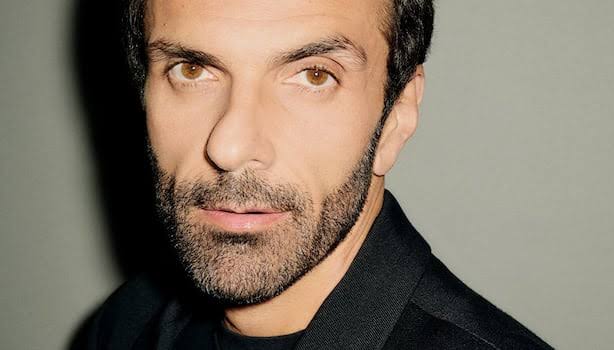
Close editorial study of Cédric Charbit's face in colour, lit against a soft green-grey backdrop
03Close study. Editorial portrait session.

Photographed in the register the industry reserves for its executives — plain, frontal, unstyled.

A short selection of portraiture. The full visual archive, including appearances and industry events, sits on the Media & Gallery page.

Media & gallery

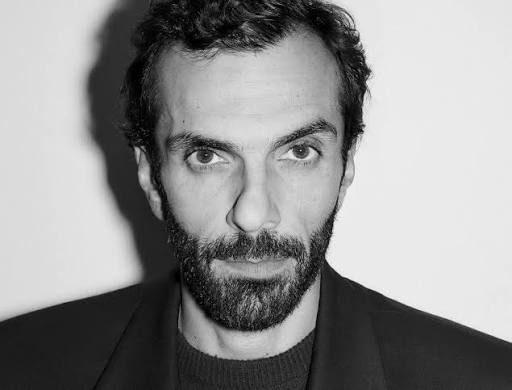
Black and white portrait of Cédric Charbit looking directly at the camera
04Monochrome portrait.

10  Enquiries

For press, speaking and professional enquiries

Enquiries relating to this website are handled by Mr. Digant Sharma. Please use the details on the contact page.