Cédric Charbit CEO, Saint Laurent
+91 97699 99960 im@digantsharma.com Sign out

HomeAbout

02  Executive profile

A merchandiser
who became
a chief executive

Cédric Charbit did not arrive in luxury through design or through finance. He arrived through the buying office — the part of the business that decides what a store will actually carry — and has spent the rest of his career close to the point where a creative idea becomes a product someone chooses to own.

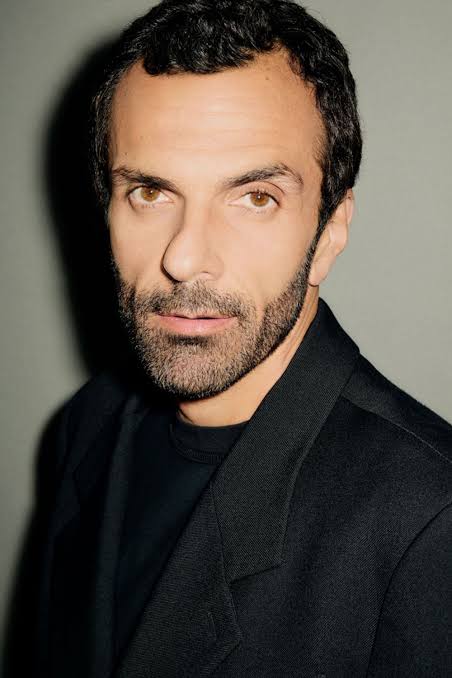
Colour portrait of Cédric Charbit in a black jacket, photographed against a soft grey-green studio wall
01Cédric Charbit, Chief Executive Officer of Saint Laurent.

Verified record

The essentials

Only information that appears in Kering's published announcements or in the established international trade press is stated as fact on this website. Where a detail is not publicly documented, it is left out rather than estimated.

Career journey in detail

Name
Cédric Charbit
Nationality
French
Education
Graduate of ESC Toulouse (TBS Education)
Position
Chief Executive Officer, Saint Laurent — effective 2 January 2025
Previously
President & Chief Executive Officer, Balenciaga (November 2016 – January 2025)
Group
Member of the Kering Executive Committee since 1 July 2019
Earlier
Printemps (from 2001); Emilio Pucci, Italy (from 2009); Saint Laurent (from 2012)
Based
Paris, France

Professional background

Six chapters

i

Formation

Toulouse

He is French, and a graduate of ESC Toulouse — the business school now known as TBS Education. It is a formation in commerce rather than in design, and it shows in the shape of the career that followed: a route into fashion through the commercial side of the business, at a moment when the industry was still largely run by people who had come up through wholesale and retail.

That starting point matters for reading the rest of the record. Executives who enter luxury through merchandising tend to develop a particular literacy — an instinct for what an assortment is doing, where a price ladder breaks, which category is carrying a collection and which is being carried by it. It is an unglamorous fluency, and it is the one that most often ends up in the chief executive's chair.

ii

The department store

Printemps, from 2001

He began his career at Printemps in 2001, joining as a buyer for luxury. He advanced through the organisation to become General Merchandise Manager and then Deputy Director of the buying office.

A Paris department store is an unusual vantage point. Unlike a single house, it sees the whole market at once — dozens of brands competing on the same floor, in the same weather, for the same customer. A buyer learns quickly which reputations are supported by sales and which are supported by press, and how differently the two behave over a season. That comparative view is difficult to acquire from inside a single brand, where the only available benchmark is the house's own history.

iii

Italy

Emilio Pucci, from 2009

In 2009 he was appointed Deputy Chief Executive of Emilio Pucci, then part of the LVMH group, and moved to Italy. It was his first position inside a house rather than a retailer, and his first outside France.

The move is significant in two respects. It placed him inside the Italian manufacturing and ready-to-wear ecosystem — where a great deal of European luxury is actually made — and it gave him operational responsibility for a brand with a distinctive, heavily codified visual identity. Both are recurring features of the work that followed.

iv

Saint Laurent, first time

From 2012

He joined Kering in 2012, arriving at Saint Laurent in Paris as Product Strategy Director. Over the following four years his responsibilities broadened: merchandising first, and then the role of Executive Vice President covering product, retail merchandising and communication.

The combination of those three functions in a single remit is worth noting. Product, merchandising and communication are frequently run as separate territories with separate logics, and the seams between them are where brand consistency is usually lost. Holding them together is a structural decision as much as a personnel one.

v

Balenciaga

November 2016 – January 2025

In November 2016 Kering appointed him President and Chief Executive Officer of Balenciaga. He arrived one year after Demna had taken up the creative direction of the house, and the pairing lasted eight years — an unusually long run by the standards of the contemporary industry.

The period included Balenciaga's return to haute couture in July 2021, fifty-three years after the closure of the founder's atelier. The collection was designed under Demna's creative direction; the decision to re-open the discipline sat with the house.

He became a member of the Kering Group Executive Committee with effect from 1 July 2019, a position he held while running Balenciaga.

vi

Saint Laurent, again

From 2 January 2025

On 18 November 2024 Kering announced that he would become Chief Executive Officer of Saint Laurent, effective 2 January 2025, succeeding Francesca Bellettini; Gianfranco Gianangeli was named Chief Executive Officer of Balenciaga on the same date. He reports to Francesca Bellettini in her role as Kering Deputy CEO in charge of Brand Development.

It is a return rather than an arrival. He knows the house from the product side, having spent four years inside it before Balenciaga, and he works alongside Anthony Vaccarello, who has been Saint Laurent's creative director since 2016.

Black and white close portrait of Cédric Charbit against a plain wall
02Monochrome portrait.

Editorial analysis

The executive register

Fashion photographs its designers as authors and its executives as witnesses. The conventions are strict: plain background, dark tailoring, no props, a directness of gaze that signals accountability rather than personality. It is a visual grammar borrowed from corporate portraiture and softened only slightly by the industry it serves.

The images collected on this site sit inside that convention. They are useful less as likenesses than as evidence of a role — the chief executive as the person who answers for the house without ever being the reason anyone bought from it.

Media & gallery

Professional territory

Where the experience sits

Five domains recur across the documented career. They are described here as fields of professional practice, drawn from the roles held rather than from any statement of personal philosophy.

01

Product strategy & merchandising

The through-line of the record: buying at Printemps, product strategy and merchandising at Saint Laurent, and the product remit inside the Executive Vice President role. This is the discipline of deciding what gets made, in what quantity, for which market and at which price — and of keeping that decision coherent with what the house says it is.

02

Brand development

Eight years running Balenciaga and, since 2025, Saint Laurent — both houses with dense archives, strong founder identities and international ambitions. Brand development at this level is the work of deciding what a house will be recognised for over a period longer than any single collection.

03

International management

A career spread across French retail, Italian ready-to-wear and two Paris houses with worldwide store networks. Running an international business is less about presence in many markets than about maintaining one identity across markets that read it differently.

04

The creative–commercial interface

The defining structural relationship of the modern fashion house is between its creative director and its chief executive. The documented record includes an eight-year working partnership at Balenciaga and a current one at Saint Laurent alongside Anthony Vaccarello.

05

Group-level leadership

Membership of the Kering Executive Committee since July 2019 places the work inside a multi-brand group — where a house is one asset among several, capital is allocated centrally, and a chief executive is answerable for a portfolio position as well as for a brand.

Continue

The career journey, chapter by chapter

A fuller chronological account of the roles held, the houses involved and the documented record of each appointment.